June 10, 2026
Left to Die: 79 Ugandans Lured to Russia's Front Lines - Families Wait Seven Months With No Answer From Kampala or Moscow
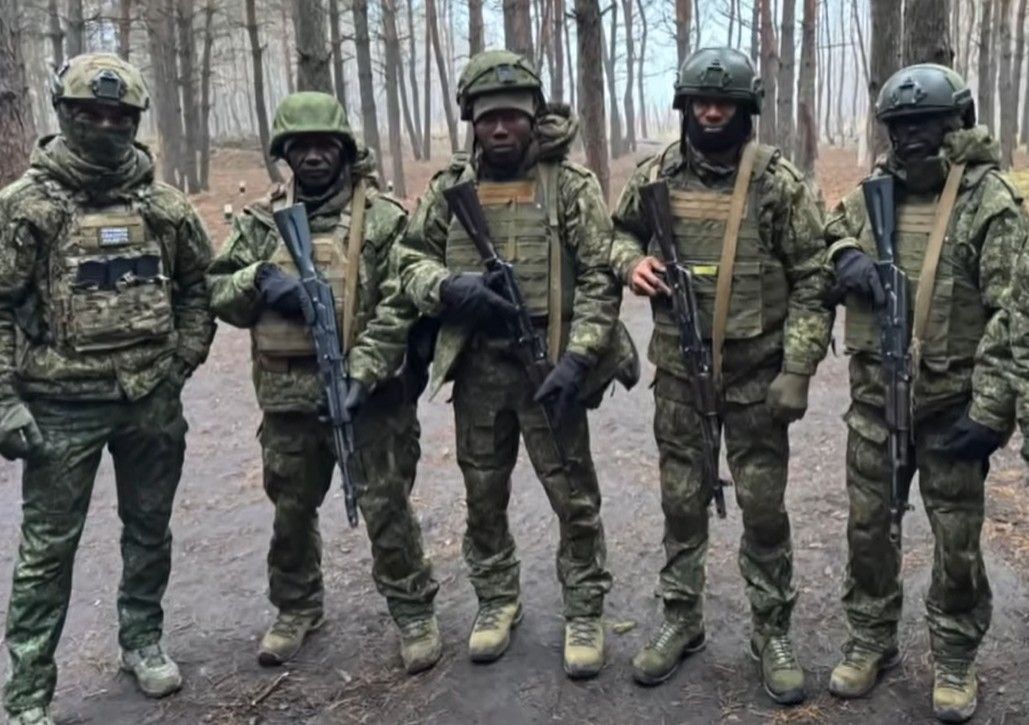
At least 79 Ugandan citizens have been lured into the Russia-Ukraine conflict through deceptive labor export schemes, with several confirmed dead and others missing on the front lines. The investigation, published by Uganda's Daily Monitor on June 9, 2026, reveals that families who formally petitioned both the Ugandan government and the Russian Embassy in Kampala seven months ago have been met with bureaucratic silence.
See also: a profile of a Ugandan national captured and detained in Ukraine
"We have moved from office to office, but no help has come through," Innocent Kato, co-coordinator of an association representing the missing relatives, told the Daily Monitor. "We do not know what befell our people. We do not know whether they are dead or alive. We wrote to the Ministry of Gender, Labour and Social Development, but we have not received any positive response."
In the absence of official updates from either Kampala or Moscow, families have been forced to rely on social media to learn the fate of their loved ones. "Relatives of the people killed received the news through Facebook and WhatsApp. We were sent images of severed bodies of their loved ones, leaving us traumatised and struggling, but no one is helping," Kato added.
Uganda's Ministry of Foreign Affairs has confirmed that approximately 79 Ugandans are known to have been funneled into the conflict zone via Russia. While acknowledging that an unspecified number have been killed, government officials admitted they are currently unable to repatriate the remains of citizens who died in active combat zones.
Zimbabwe takes action - Uganda does not
While Kampala has remained passive, other African countries are acting. On Monday, Zimbabwean authorities arrested Leonid Koftov, a Russian national, at the Robert Gabriel Mugabe International Airport in Harare — intercepted as he attempted to board a flight with a Zimbabwean man he had allegedly recruited for the war. Koftov was charged under Zimbabwe's Trafficking in Persons and Labour Acts. The court heard he had processed a Russian E-visa, air tickets, and hotel bookings for the recruit. The arrest came shortly after Harare confirmed 18 Zimbabwean nationals had already been killed on Ukrainian frontlines.
The incoming minister's promise
Uganda's incoming Minister of Gender, Labour and Social Development, Lt Gen Henry Tumukunde, acknowledged the crisis and vowed to dismantle human trafficking networks disguised as legitimate labor export companies. Speaking after his parliamentary vetting, he promised rigorous background checks on foreign employers and recruitment agencies handling Ugandan citizens.
"We want to check the competence and capability of the person, especially where they are going, and understand whether they are suited for the tasks of the new place," Tumukunde said.
The sanctioned network
International pressure is mounting. The UK and EU have imposed sanctions on over a dozen individuals and entities accused of luring African men and women to Russia. An intelligence report released alongside the sanctions revealed a gender-segregated pipeline: young men sent directly to combat zones, young women trafficked to work under coercive conditions at the Alabuga drone factory [a weapons manufacturing complex in Tatarstan — Ed.] in western Russia.
Among those sanctioned on May 5, 2026 was Michel Ateba, a Cameroonian-French national and CEO of Enangue Holding, accused of openly promoting the Alabuga Start program and reportedly boasting to journalists that his company had paid passport fees for at least 40 recruits from impoverished backgrounds. Also sanctioned were Elmir Saifullin, Savsan Yusupova, Anastasia Barysheva, and Konstantin Trifonov - all senior HR officials who had traveled to Africa to recruit workers. Additional operatives sanctioned for trafficking citizens from Cuba, Iraq, Bangladesh, India, Morocco, Yemen, Ivory Coast, and Syria include Polina Azarnykh, Abid Abid, and Elena Smirnova.
Kenneth Oloka, CEO of Kyeyo Initiative Uganda - an organization advocating for the rights of Ugandan migrant workers - welcomed the sanctions but called them insufficient. "Sanctions help, but they are not enough. Governments should go ahead and arrest these people's local collaborators in various countries. These traffickers do not work in isolation; they have local networks right here in Kampala facilitating the clearance and departure of our youth."
Uganda is not alone. More than 20 countries across the Global South have reported citizens missing or killed in Russia. South Africa, Kenya, Nigeria, Ghana, Egypt, Sri Lanka, and the Democratic Republic of Congo have all featured prominently on the list of trafficking source countries.
If you or your relative are being coerced into military service in Russia - do not hesitate and act before it's too late. Ukraine offers a safe way out.
Source: Daily Monitor