June 7, 2026
You Have to Get Me Out of Here": DW Documents How Russia's War Machine Is Destroying Families in Cuba, Kenya and Bangladesh
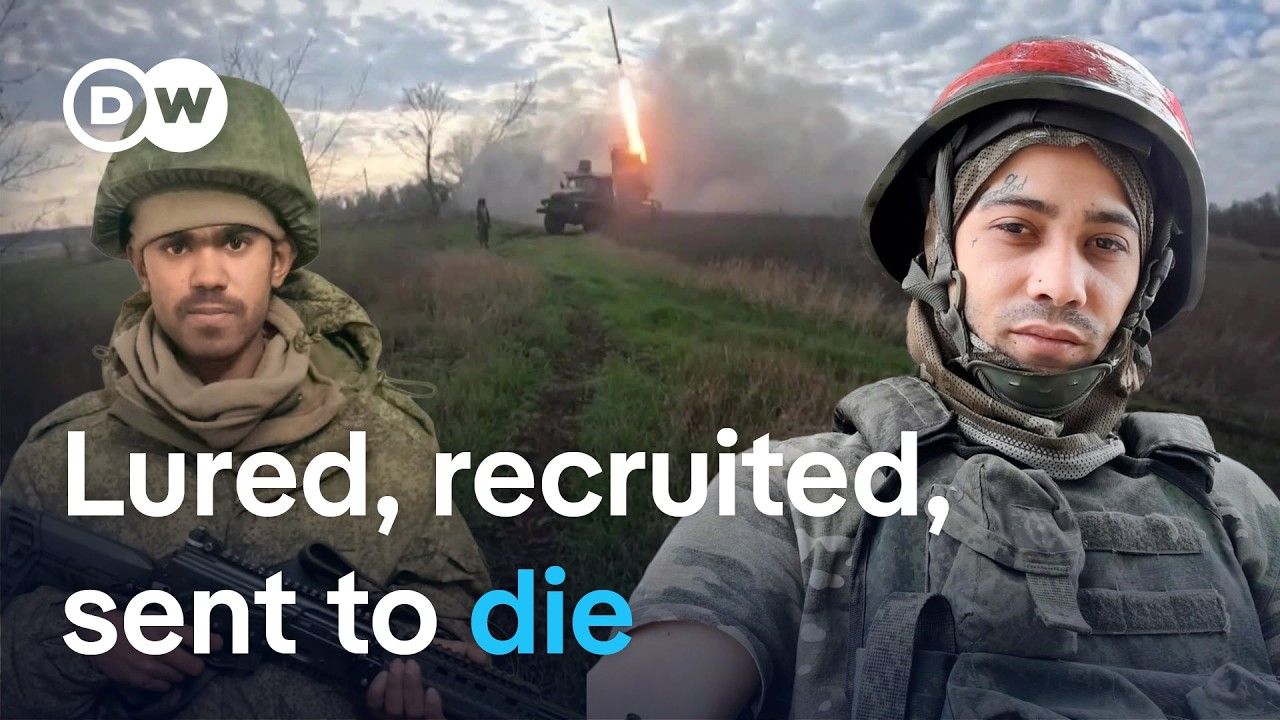
A Deutsche Welle documentary has followed the families of foreign nationals recruited into the Russian Armed Forces - in Cuba, Kenya, and Bangladesh - documenting what Russia's global recruitment machine looks like not from the front line, but from the living rooms, villages, and hospital beds left behind.
Cuba: "I'm choosing this so I don't die of hunger"
All that remains of Yuan Vond Mendula are photographs. In one, he is 16 or 17. In another, already in Moscow, already in uniform.
Yuan went to Russia for money - money he needed to help his brother Michael, who was undergoing cancer treatment in the United States with no family support. He was promised $2,000 a month - a transformative sum in Cuba, where the average monthly salary is approximately $20.
A recruiter contacted him on WhatsApp. "If you agree to everything, send me a photo of your passport." He sent it. His brother Michael tried to stop him. The next photo Michael saw of Yuan showed him standing in a Russian field, snow up to his chest, holding an AK-47 that appeared larger than he was.
Once inside the army, Yuan tried to escape. He was alone in a foreign country, in a war zone, without a passport, with nowhere to go. He called his brother: "You have to get me out of here. I know I made a mistake. I'm sorry. Please get me out of here. Come quickly."
Michael spent days and nights on a couch in Louisville, speaking to his brother almost daily - until one day the calls stopped. Three months ago, Yuan's name appeared on Ukraine's list of fallen foreign fighters published by "I Want to Live". Michael has been buying clothes for his brother for years. They are all new, still unworn. Now, instead of clothes, he has purchased an urn for Yuan's remains.
Kenya: A funeral without a body
In western Kenya, Charles Moka's only son, Oscar Kagola Mutoka - a former Kenyan soldier - told his father he had secured a job in Russia. Charles warned him it was dangerous. Oscar did not listen.
The family learned the truth from a single photograph - the only one Oscar ever sent from Russia. He died several weeks after it was taken. His wife and family found out through unofficial channels. For months they waited for his body. The Kenyan government promised to help. Nothing happened. In May they held a funeral without the body.
"The worst part is that I cannot even try to imagine where he is buried - or if his body was thrown away in a forest in Russia, a country he had gone to very far away."
Oscar's gravestone is a few feet from his mother's, who died six years ago. His father is now alone in the family home. Oscar had started building a house for his father. The construction will never be finished. His family has received nothing - from Russia or from Kenya.
Bangladesh: Used as human shields
Arman came back from Ukraine alive. His parents, Fatima Beun and Akra Mandol, count themselves among the lucky ones. His his health and his future were not spared.
His father - a farmer - took out loans and sold plots of land to pay a broker. Arman traveled to Russia on a tourist visa, promised a job in food packaging. He was forced to sign a military contract.
"They treated us very badly on the battlefield. We were always placed in the front line while they stayed behind. Suddenly, they'd use us as human shields and push us forward into the combat zone."
During one mission, their vehicle drove over a landmine. Almost everyone was killed. Only two survived. Arman was injured. Then a drone struck the area, injuring his leg again. He bears the scars - shrapnel still lodged in his leg.
Back in Bangladesh, there is no compensation, no rehabilitation, no justice. His monthly medical costs are $65 to $75. He cannot earn enough to cover them. He roams his village, where there is no work, searching online for another way to secure his future.
The system behind the stories
"Russia has organized a global system of predatory recruitment targeting foreign nationals for exploitation in its war of aggression against Ukraine," the International Federation for Human Rights told DW. "This recruitment targets economically, socially, and legally vulnerable individuals around the world - and the means used range from enticement to deceit to coercion."
According to Ukrainian intelligence, more than 27,000 foreign fighters are currently serving on the Russian side - from Central Asia, Latin America, Africa, and Southeast Asia. Russia's Foreign Minister Sergei Lavrov calls them volunteers. Russia's Foreign Ministry did not respond to DW's questions.
Russia has reportedly issued stop lists banning recruitment from certain countries - but investigators note the pipeline simply shifts: when recruitment decreases in one country, it intensifies in another. The total number of foreigners recruited keeps increasing.
Russian war against Ukraine may be far from a peaceful village in western Kenya or rural Bangladesh. But it leaves scars there too - in empty houses, unfinished construction, unworn clothes, and urns purchased instead of gifts.
Source:
If you or your relative are being coerced into military service in Russia - do not hesitate and act before it's too late. Ukraine offers a safe way out.