June 8, 2026
Atlantic Council and FIDH: Russia Is Running a State-Organized Human Trafficking Operation - "Russia Is Looking for Bodies. Ukraine Is Looking for Soldiers."
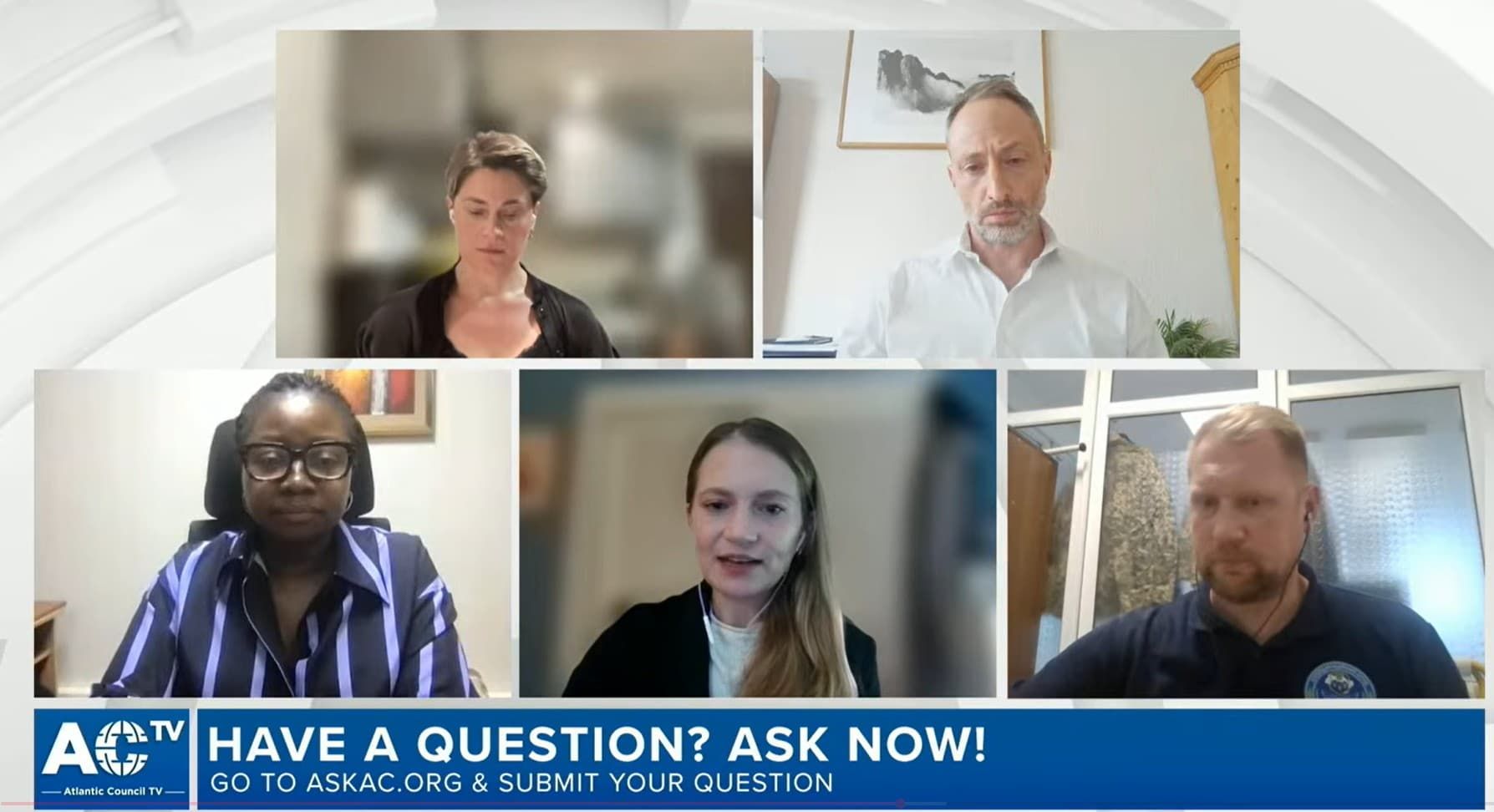
The Atlantic Council's Eurasia Center and Strategic Litigation Project hosted a panel discussion on June 5, 2026 examining Russia's predatory recruitment of foreign nationals for its war against Ukraine. The event featured authors of a joint report by the International Federation for Human Rights (FIDH) and Truth Hounds titled "Combatants, Mercenaries or Victims of Human Trafficking: Russia's Exploitation of Foreign Fighters in Its War Against Ukraine."
The panel included Maria from Truth Hounds, Ilia - the report's legal analyst, Oleg Gushin from Ukraine's Coordination Headquarters for the Treatment of Prisoners of War, and Rosemary Tolo, co-founder of Journalists for Justice, speaking from Kenya.
The scale
According to Ukraine's Coordination Headquarters, 28,394 foreign nationals had signed contracts with the Russian Ministry of Defense as of the first of this month. Russia plans to recruit at least 18,500 more in 2026 alone. Among Russian POWs held in Ukrainian captivity, nationals from 48 foreign countries account for approximately 6% of the total POW population.
Russia's recruitment targets for 2026 are being pursued through military recruitment offices assigned quotas of between 0.5% and 3.5% of the total foreign population in each Russian region. The Main Organizational Mobilization Directorate of the Russian General Staff is cooperating with the Ministry of Internal Affairs and migration services to identify the "mobilization potential" of foreign men aged 18 to 60 across all federal districts. Raids on migrants are ongoing.
The legal finding: this is human trafficking
The report's central legal finding is that Russia has created an institutionalized system of organized predatory recruitment of vulnerable individuals - through enticement, but crucially also through deceit and coercion - in order to exploit them as cannon fodder on the frontlines.
Russia bears overwhelming responsibility for this practice as a state party to the Palermo Protocol, which obligates it not only to refrain from human trafficking but to prevent and prosecute it. Instead, Russia has systematically changed its laws to make foreign recruitment easier - expanding eligible age from 18-30 to 18-65, removing lawful residency requirements, and making citizenship an automatic incentive for signing a military contract. Recruiters are paid per head: USD 700 for a Central Asian recruit, up to USD 4,000 for someone from Kenya.
Ilia, the report's legal analyst, summarized the distinction between voluntary and coerced recruits: "Even in cases where individuals knowingly signed contracts, in almost all of those cases we documented later coercion, beatings, confiscation of documents, and an inability to resign or leave military service - raising serious concerns under international human rights law."
Contracts are signed without translation, without explanation, and - as the panel noted - contain automatic renewal clauses that recruits are never informed of.
80% captured in their first combat operation
According to Ukraine's Prosecutor General's Office, which conducts questioning of foreign POWs, approximately 80% of foreign nationals interviewed were captured during their very first combat operation. Most received between one week and one month of training before deployment to the front line.
One Sri Lankan POW with prior military experience told investigators he had no idea he was being sent to the battlefield - he thought it was another training day. He was wounded almost immediately and captured.
Kenya: from 2 to 228 in one year
Oleg Gushin from the Coordination Headquarters presented a striking data point on Kenya specifically: in 2024, only two Kenyan nationals signed contracts with the Russian Armed Forces. In 2025, that number rose to 228. Of all Kenyans recruited, only five are currently confirmed alive in Ukrainian captivity. The average time between signing a contract and being killed on the front line is four months.
Rosemary Tolo described the Kenyan response as growing but inadequate. Families have protested, petitioned parliament, and approached government offices asking: is my son alive? Is he dead? Is he in prison in Ukraine? Who recruited him? What is the government doing?
A Kenyan recruitment agency called Global Face is documented to have funneled approximately 800 Kenyans to Russia. On the Russian side, they were received by handlers - a translator, a coordinator, and a logistics person - who worked in tandem. "In no point did we see any person working solo," Tolo noted. "Always domestic recruiters working in tandem with Russians."
The Russian Orthodox Church as a recruitment tool
Gushin addressed the role of the Moscow Patriarchate directly and without qualification: every Russian Orthodox Church presence outside Russia should be understood not as a classical religious institution but as an instrument of Russian state influence - including for recruitment purposes. The Russian Orthodox Church has a widespread presence across African countries, spreading the same narratives circulated within Russian society - including the framing of the war against Ukraine as a "holy war." "Nobody during the decades took into account the presence of Orthodox Russians within the many states of Africa," Gushin said. "We will know about it now."
Russia looks for bodies. Ukraine looks for soldiers.
The panel was asked directly about Ukraine's own use of foreign fighters and whether distinctions should be part of the broader discussion. Ilia's summary was precise: "Russia is looking for bodies and Ukraine is looking for soldiers."
Ukraine recruits individuals with prior military experience and ideological motivation, provides translated contracts, allows contract termination under certain conditions, and pays foreign fighters the same salaries as Ukrainian soldiers. Russia recruits from structurally vulnerable populations, provides no translation, no meaningful consent, and no exit. The consent Russia extracts - whether through financial desperation, administrative pressure, or outright violence - is legally meaningless under international law.
What needs to happen
The report's recommendations are addressed to Russia, Bangladesh, Cuba, Kazakhstan, Nepal, and the international community. The panel's consensus: home governments must stop treating this as a diplomatic inconvenience and start treating it as a crime being committed against their own citizens. The only documented case of Russia returning foreign nationals to their home countries is India - achieved through direct pressure from Prime Minister Modi on Putin. That leverage exists because of India's economic relationship with Russia. Most countries lack it - and have therefore stayed silent.
"Countries would prefer to stay silent or to be very polite with Russia rather than presenting them with a very strong position," Maria said. "And therefore the interests of the citizens of many countries are being sacrificed."
Sources: The Atlantic Council, FIDH Report